On the morning of 14 December 1600, two fleets met off the coast of what is now Nasugbu, Batangas. On one side, a hastily converted Spanish merchant ship called the San Diego, overloaded with fourteen cannons stripped from Manila’s fortifications and 450 fighting men crammed on top of a full trade cargo. On the other, two battered Dutch vessels under Admiral Olivier van Noort — the remnants of an expedition that had left Rotterdam two years earlier with four ships and 248 men, aiming to circumnavigate the globe.
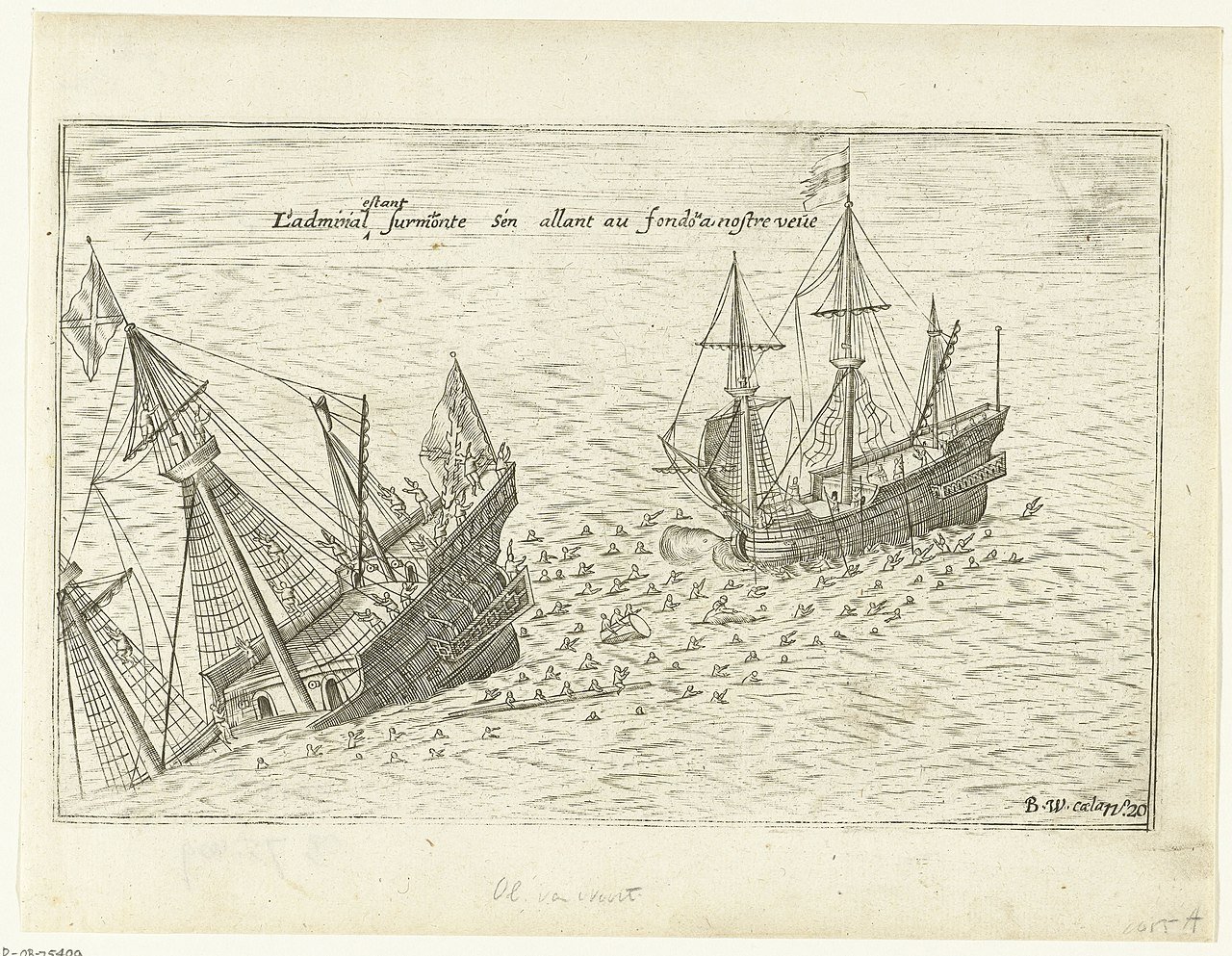
What followed was six hours of cannon fire and hand-to-hand combat within sight of a small island that would later take its name from the battle’s aftermath.
The San Diego sank. Most of its 450 men drowned, pulled under by the weight of their armour. Only 22 survived — all unarmoured commoners who could swim. The Spanish judge commanding the fleet, Antonio de Morga, swam for four hours before reaching shore.
Van Noort extinguished a fire on his flagship, captured the second Dutch ship that the Spanish had seized, and limped home to Rotterdam the following August. He arrived with 45 of his original 248 crew and the distinction of being the first Dutchman to sail around the world.
The island where the San Diego went down became known as Fortune Island. Four centuries later, the wreck still sits on the seabed, two and a half hours from Anilao.
The World in a Cargo Hold
In 1992, French marine archaeologist Franck Goddio located and excavated the San Diego. His team recovered 34,407 artefacts and ecofacts — one of the richest underwater archaeological finds in Southeast Asian waters.
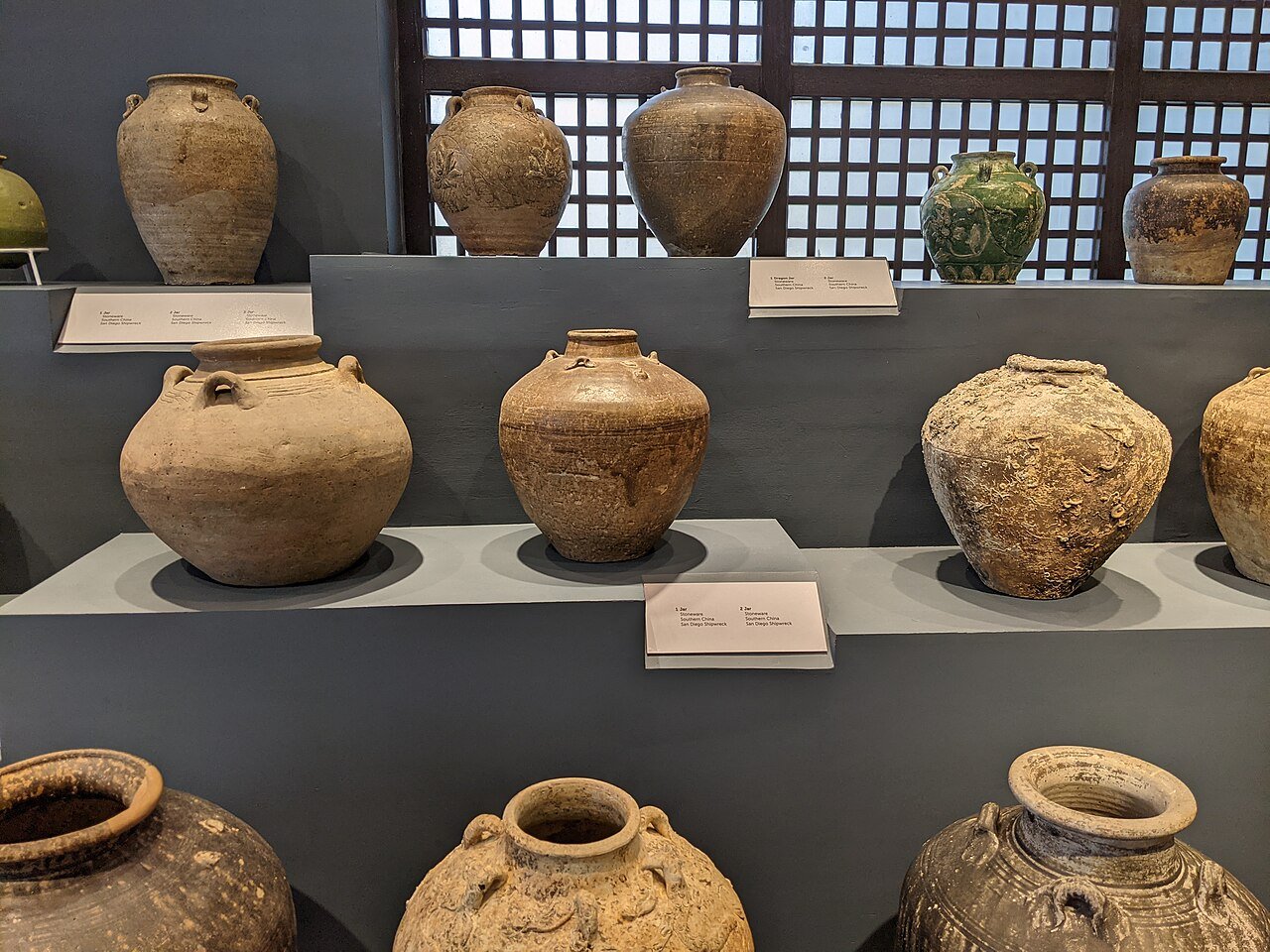
The cargo manifest reads like an inventory of the early modern world.
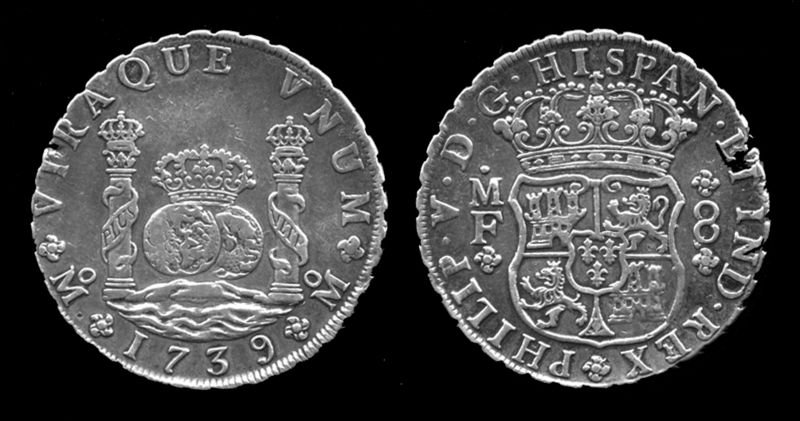
More than 500 pieces of blue-and-white Chinese porcelain — the kind produced in Jingdezhen for export across Asia and, via Manila, to Mexico and Europe. Over 750 stoneware jars from China, Thailand, Burma, and Spain. Seventy Philippine-made earthenware vessels — evidence that local pottery was aboard alongside the imports. Fourteen bronze cannons, Portuguese in manufacture, that had been guarding Manila before the governor ordered them loaded onto a merchant ship. Mexican silver coins minted in the Americas. European musket parts and navigational instruments. And Japanese samurai katanas — the weapons of ronin mercenaries who served as guards on the Manila galleons.
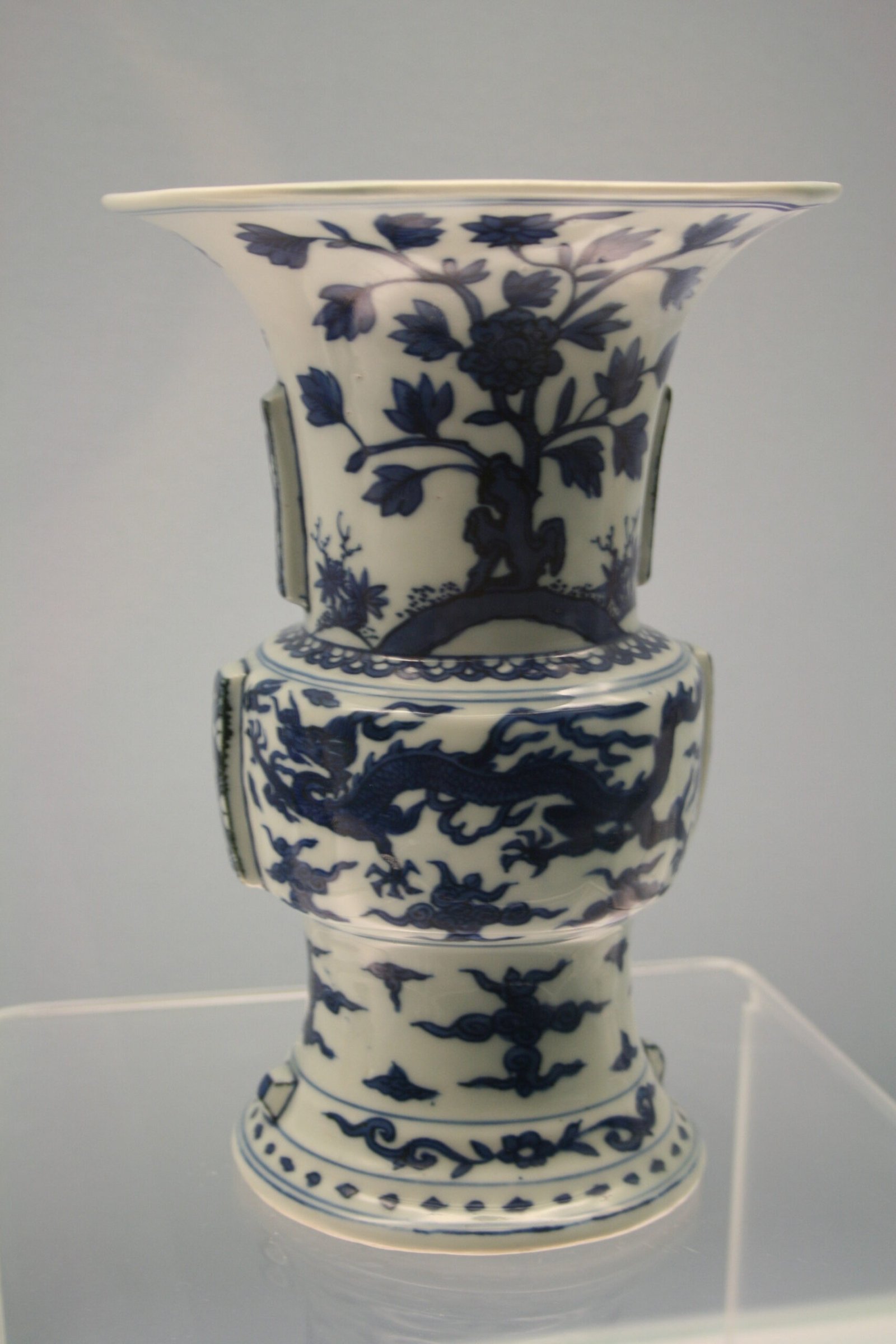
One ship. Chinese silk traders, Spanish colonial administrators, Portuguese munitions, Mexican silver, Japanese swords, Philippine pottery. The San Diego is not a Spanish shipwreck. It is a cross-section of proto-globalisation, preserved in the silt off Batangas.
The Silver Road
The San Diego was part of a trade network that connected the world for 250 years.
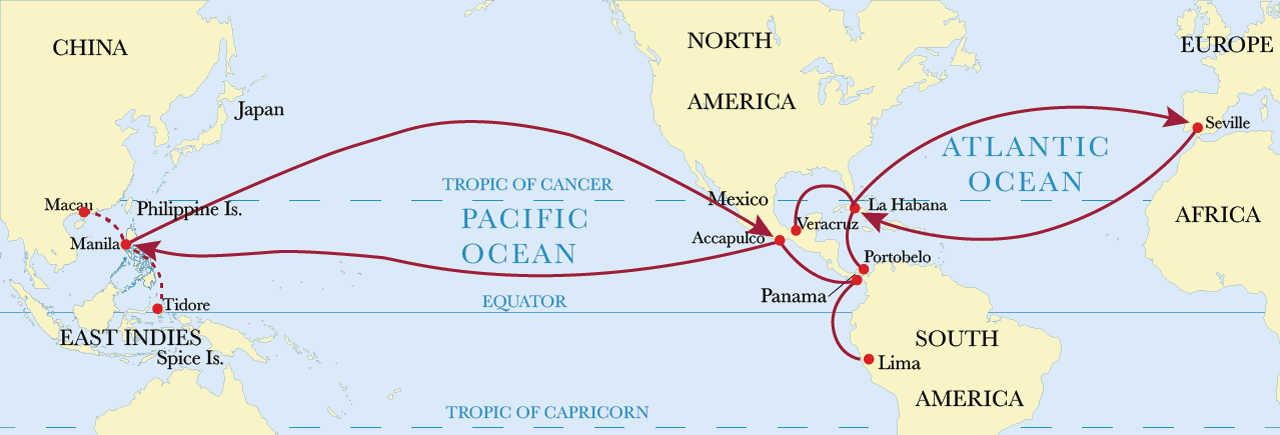
The Manila-Acapulco galleon trade, which ran continuously from 1565 to 1815, was arguably the first truly global commercial route. Westbound from Acapulco: Mexican silver — an estimated one-third of all silver mined in the Americas — crossed the Pacific to Manila, where it was exchanged for Chinese silk, porcelain, lacquerware, and tea. Japanese copper and swords. Indian textiles. Southeast Asian spices. Philippine gold, cotton, and beeswax.
Manila’s Parian — its Chinese quarter — became Asia’s largest international marketplace. The galleon trade made the Philippines the pivot point of a system that connected Potosi’s silver mines in Bolivia to the silk workshops of Suzhou, with stops in Acapulco, Manila, Macau, and Nagasaki.
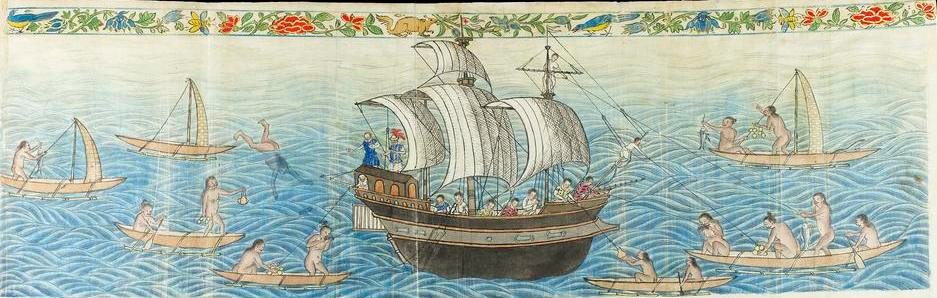
The human cost was staggering. Galleon crews were majority Filipino and Southeast Asian — press-ganged farmers, street children, vagrants. Less than a third were Spanish. The eastbound crossing to Acapulco took four to six months, with mortality rates reaching 50% from scurvy, typhus, and typhoid. Overcrowding of 400 to 600 people on a single vessel. Food was rice, salted meat, and dried fish. Water was rationed.
Those Filipino sailors who survived the crossing and jumped ship in Acapulco became the first Asian settlers in the Americas — predating any other Asian immigration by centuries.
Samurai at Sea
Among the more remarkable figures aboard the Manila galleons were Japanese ronin — masterless samurai who found employment as mercenary guards on Spanish vessels.
The early 1600s were a volatile period in the waters around the Philippines. Chinese pirates raided shipping lanes. Dutch and English privateers hunted Spanish galleons for their silver cargo. The Spanish colonial government in Manila, perpetually short of military resources, hired Japanese warriors — men trained in sword combat, experienced in the chaotic naval battles of Japan’s Warring States period — to defend their merchant fleet.
The katanas recovered from the San Diego are physical evidence of this arrangement. Japanese steel, forged for a feudal war, carried to the bottom of the Philippine sea defending Spanish silver against a Dutch expedition.
It is precisely the kind of story that resists the neat categories of national history. It is not Japanese history, or Spanish history, or Philippine history, or Dutch history. It is all of them at once — tangled together in the cargo hold of a sinking ship off the coast of Batangas.
Fortune Island: Ruins on Ruins
The island where the San Diego sank has had its own unlikely history.
In 1995, Jose Antonio Leviste — former governor of Batangas — purchased the 27-hectare island and built the Fortune Island Resort Club, an exclusive members-only retreat for Manila’s elite. Its centrepiece was a replica Parthenon, a row of Greek columns erected on a limestone cliff overlooking the sea. The broader resort included a saltwater pool, a freshwater desalinator, a helipad, a serpentarium, and a small museum dedicated to the San Diego.
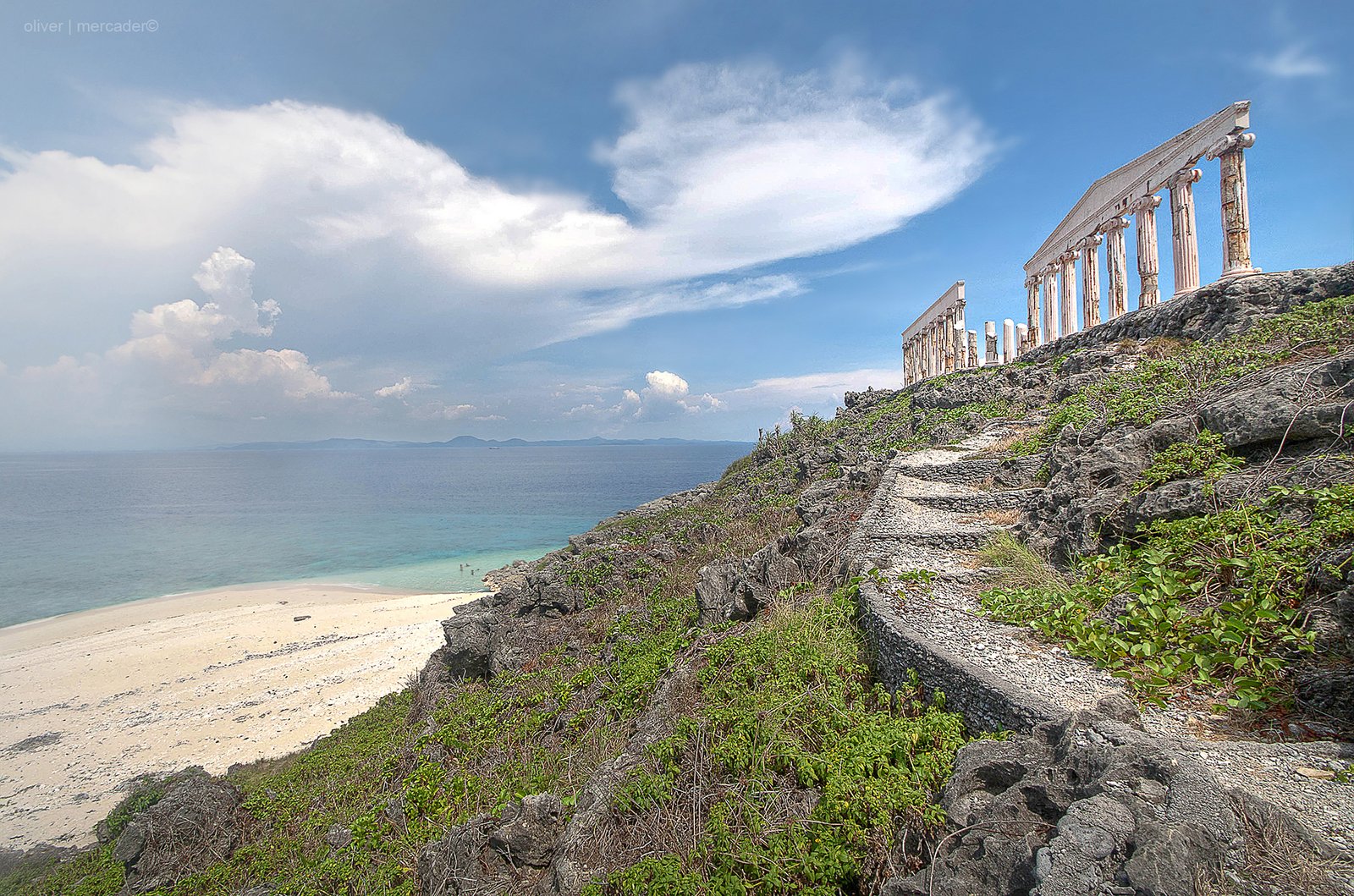
It lasted about a decade. The island had no reliable freshwater supply, and typhoon damage proved unsustainable. Leviste pulled out in 2006. The structures decayed. A Korean businessman reopened it briefly as a budget adventure destination in 2013. Today, Fortune Island operates as a semi-managed day-trip and camping site. The Parthenon columns — cracked, weathered, standing against the sky — are now the attraction, an accidentally beautiful ruin perched above a 400-year-old shipwreck.
Beneath the columns, the diving is excellent. A blue hole composed of three sinkholes dropping into underground caverns. Deep valleys with coral formations. Caves with walls of soft pink coral. White-tip reef sharks on the outer reef. And the remains of the San Diego itself, scattered on the seabed where it has lain since that morning in December 1600.
What the Sea Preserves
There is a principle in underwater archaeology: a sealed wreck preserves artefacts in relational context. On land, objects are moved, traded, stolen, relabelled, decontextualised. On the seabed, they remain where they fell — a material snapshot of a single moment in time. The San Diego’s cargo tells us not just what was being traded in 1600, but how those objects related to each other. Chinese porcelain packed alongside Philippine earthenware. Japanese swords next to Portuguese cannons. The social structure of the ship — who carried what, who fought with what, who drowned in what — is readable from the distribution of objects on the seafloor.
Seventy-five percent of the San Diego’s recovered artefacts are now in the Museo Naval in Madrid. Twenty-five percent went to the National Museum of the Philippines in Manila, where they are displayed in a dedicated San Diego Gallery. The split — three-quarters to Spain, one-quarter to the country in whose waters the ship sank, carrying pottery made by its people — mirrors a broader post-colonial question about who owns the past when the past was itself a story of overlapping claims.
The Philippines has not ratified the UNESCO 2001 Convention on Underwater Cultural Heritage. Its own National Cultural Heritage Act (RA 10066) declares all underwater cultural property to be state-owned — while simultaneously preserving a treasure hunting permit system. The contradiction is unresolved. The National Museum, chronically underfunded, cannot conduct independent underwater archaeology and relies on partnerships with foreign entities who bear the costs in exchange for artefact shares.
Meanwhile, roughly 130 Manila galleons lie on the seabed across the Pacific. About 100 of them sank within 50 miles of the San Bernardino Strait, the treacherous passage between Luzon and Samar where the trade route met the open ocean. Most have never been surveyed. Some have been looted. A few have been excavated. The rest wait — sealed archives, undisturbed, holding cargo manifests that no one has read.
Two and a Half Hours Away
Fortune Island sits approximately 43 kilometres from Anilao — a drive to Nasugbu, a tricycle to the coast, and a boat ride across open water. No major dive operator currently runs regular scheduled trips. The infrastructure for heritage dive tourism — the kind UNESCO envisions, where authorised dive centres educate visitors and wreck sites generate revenue that funds their own protection — does not yet exist here.
But the ingredients are all present. A 400-year-old wreck with a story that connects six countries and three centuries. An island with accidental ruins that look like they were designed for photographs. Diving that ranges from beginner-friendly coral walls to technical penetration caves. And a legal and cultural framework — however imperfect — that recognises underwater heritage as something worth protecting.
The sea off Batangas has been a crossroads for as long as people have sailed it. Chinese traders, Spanish administrators, Japanese swords-for-hire, Dutch circumnavigators, Filipino sailors who became the first Asians in the Americas. The modern diver visiting these waters is the latest in a long line of people drawn here by what lies beneath the surface.
The difference is that now, for the first time, we have the technology to go down and look.
Blue Ribbon Dive Resort is located in Anilao, Mabini, Batangas — two and a half hours from Fortune Island and the wreck of the San Diego.
Sources
1. Goddio, F. (1994). San Diego: Un trésor sous la mer. National Geographic / Franck Goddio Society.
2. Van Noort, O. — Voyage accounts (1598-1601). First Dutch circumnavigation.
3. De Morga, A. (1609). Sucesos de las Islas Filipinas.
4. National Museum of the Philippines — San Diego Gallery collection.
5. Batangas History: “The San Diego.” batangashistory.date.
6. Manila Galleon trade route — historical trade data, crew demographics.
7. Guampedia — “Manila Galleon Crew Members.”
8. Academia.edu — “Oceanic Deaths Aboard the Manila Galleons.”
9. UNESCO (2001). Convention on the Protection of the Underwater Cultural Heritage.
10. Republic Act No. 10066 — National Cultural Heritage Act of the Philippines (2010).
11. Fortune Island — Atlas Obscura; Wikipedia; DivePhil dive site surveys.