Most people, if asked to name the world’s richest marine ecosystem, would say the Great Barrier Reef. It’s a reasonable guess. The GBR is one of the most heavily marketed natural wonders on earth, visible from space, protected by decades of international attention and Australian tourism dollars.
It’s also wrong.
In 2005, Dr. Kent Carpenter of the IUCN and Dr. Victor Springer of the Smithsonian Institution published the results of a study that quietly redrew the map of marine biodiversity. Working in a narrow strait between the Philippine islands of Luzon and Mindoro, they documented 1,736 species of shorefish within just ten square kilometres — more than had been recorded anywhere else on the planet.
The strait was the Verde Island Passage. Their designation was precise and unambiguous: the Center of the Center of Marine Shorefish Biodiversity.
Not a national park. Not a UNESCO World Heritage Site. Not a household name. Just the single most species-rich stretch of ocean on Earth, two hours south of Manila, largely unknown outside the diving world.
Why Here?
The answer is currents.
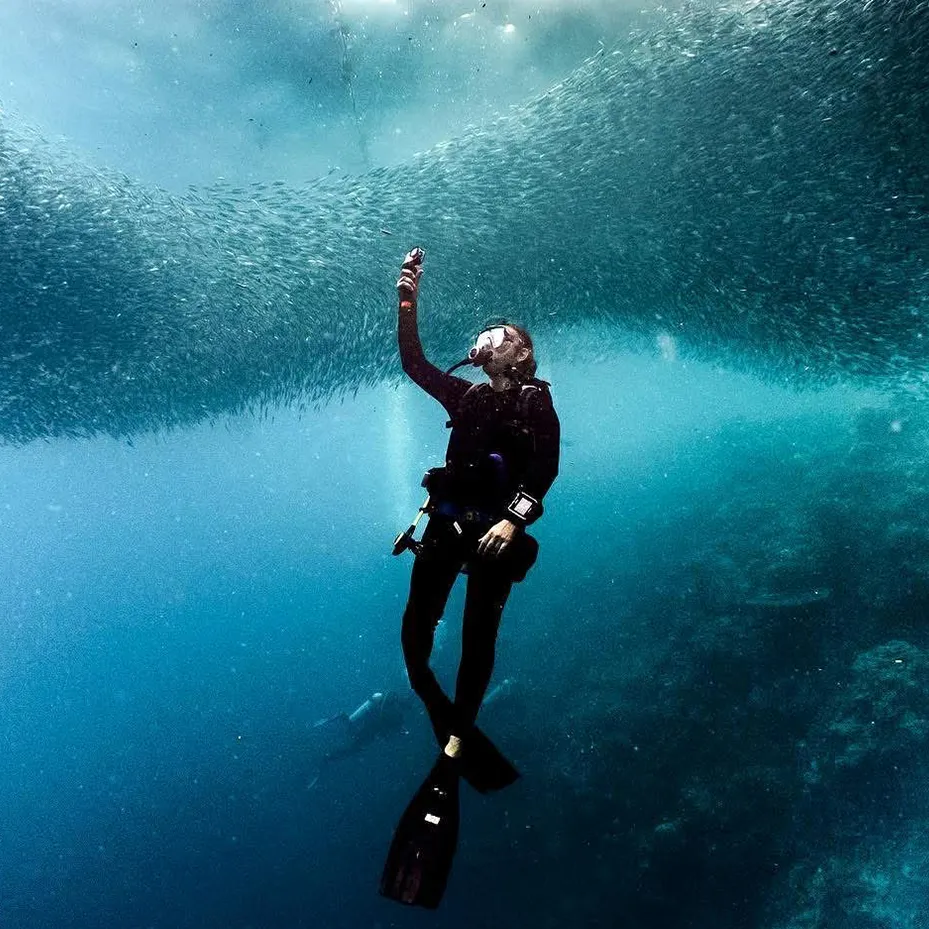
The Verde Island Passage sits at an oceanographic crossroads. Water from the South China Sea enters through the Mindoro Strait. The Sibuyan Sea pushes westward through the passage. Monsoon seasons shift the prevailing winds and alter surface current patterns through the passage. The result is a narrow corridor — roughly 100 kilometres long and 20 kilometres at its narrowest — where water from multiple ocean basins converges, mixes, and accelerates through complex submarine topography of canyons, escarpments, and fault-controlled basins.
These currents do three things that matter.
First, they deliver nutrients. Plankton arrives in extraordinary abundance, carried on currents that funnel through the passage like water through a nozzle. Coral feeds on the plankton. Fish feed on the coral. The food chain starts rich and stays rich.
Second, they maintain water quality. Unlike Florida’s reefs — which have suffered catastrophic decline from agricultural runoff, with Stony Coral Tissue Loss Disease now affecting over 96,000 acres — the Verde Island Passage benefits from clean oceanic water delivered constantly by those same currents. The reefs here are washed, not poisoned.
Third, and most remarkably, they create a settling ground. Anilao sits at the tip of the Calumpang Peninsula, precisely where Balayan Bay meets the open passage. Here, the currents slow as they enter the protected bay. Larvae and plankton that have been carried on fast-moving water suddenly find calm. They settle. They grow. A phytoplankton study measured peak density of 4,700 units per millilitre specifically at Anilao — the bay acts as a natural nursery, retaining larvae through tidal currents and gyres.
This is why Anilao, in particular, has wider species diversity than specialist destinations like Lembeh Strait or Dumaguete. Those places are famous for specific critters on dark sand — easier to spot, dramatic to photograph. Anilao’s creatures hide in living coral, requiring guides with decades of local knowledge to find. But the total species count is higher because everything, eventually, arrives here.
What Lives Here
The numbers are difficult to overstate.
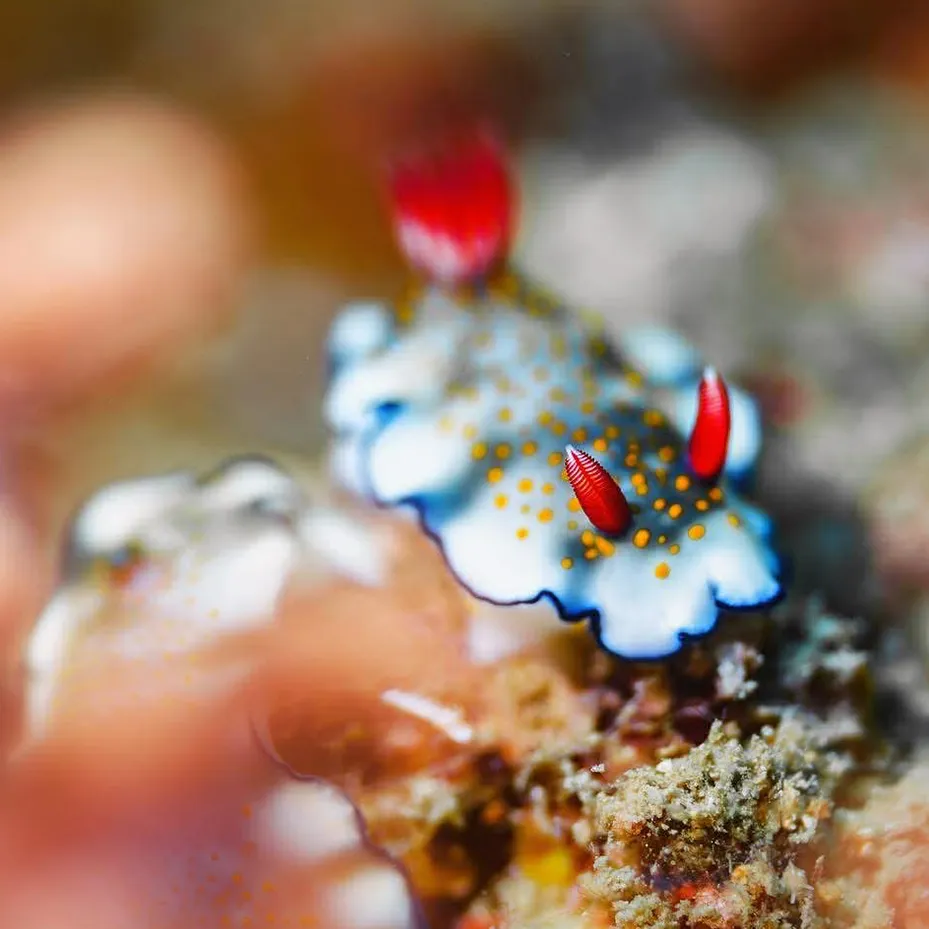
More than 400 species of coral — representing roughly 90% of all coral species on Earth. Over 1,000 species of nudibranch have been documented in the Verde Island Passage — many described by Terry Gosliner of the California Academy of Sciences, who has spent three decades cataloguing the region’s extraordinary diversity.
And the discoveries keep coming. In 2011, a 42-day California Academy of Sciences expedition led by Dr. Terrence Gosliner — partnered with the University of the Philippines and the National Museum — documented over 300 species new to science. Among them: an “inflatable shark” that pumps water into its stomach to intimidate predators, 50 new nudibranchs, deep-sea armoured corals, and a cicada with a call that sounds like laughter.
“We found new species during nearly every dive and hike,” Gosliner said.
A 2015 expedition found another 100, including 40 more nudibranchs and a starfish that eats driftwood. In 2018, another 14. The passage keeps yielding species that science has never catalogued, from waters that divers visit every day.
One marine biologist, surveying Anilao’s reefs, put it simply: there is a greater variety of fish within 100 square metres here than in all of the Great Barrier Reef.
The Reefs That Heal Themselves
In 2010, a severe El Niño event triggered massive coral bleaching across 25-30% of the Verde Island Passage. Scientists were, in their own words, “very, very concerned.”
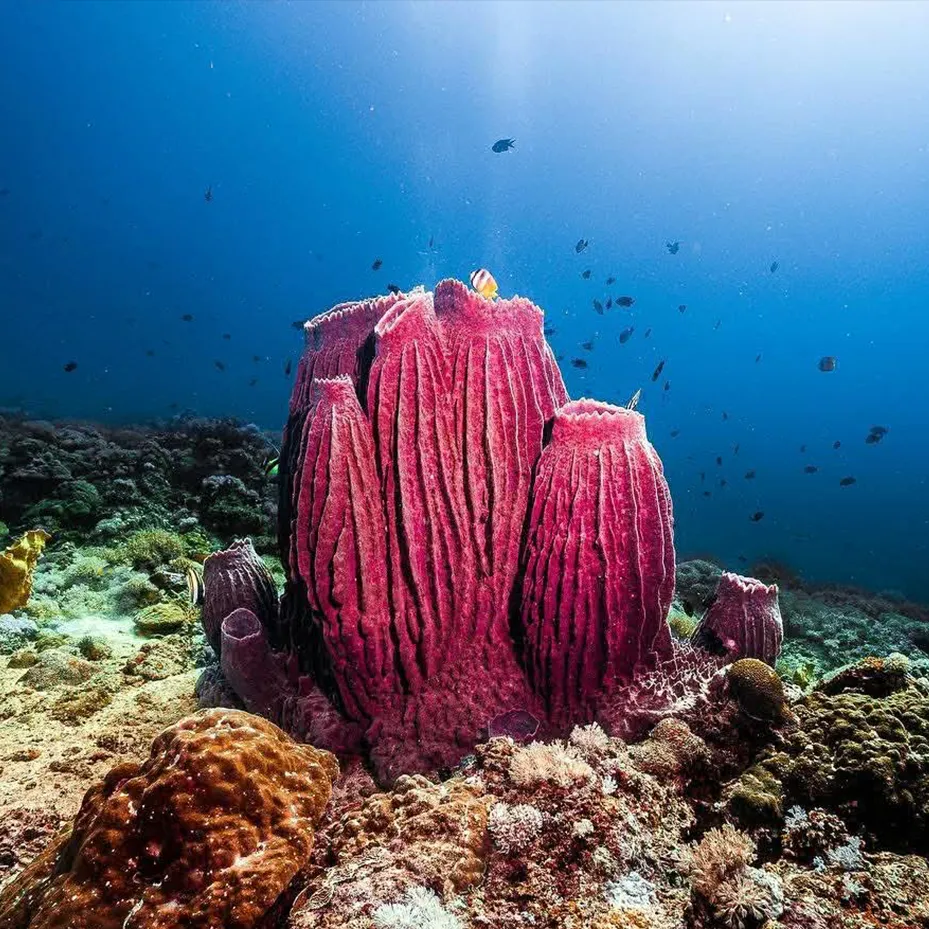
Six weeks later, the corals were regaining colour. The damage was “almost completely gone.”
This capacity for recovery has led researchers to describe the passage as a potential genetic storehouse — a living reservoir capable of repopulating damaged reefs across the entire Philippine archipelago. The diversity isn’t just impressive as a number. It represents resilience. When reefs elsewhere are dying — Florida, the Maldives, sections of the Great Barrier Reef — the Verde Island Passage keeps recovering, its genetic library intact, its currents still delivering clean water and fresh nutrients.
There is, scientists believe, “great hope that the Verde Island Passage can repopulate other parts of the Philippines.”
Protection — Slowly, Steadily
In July 2023, Dr. Sylvia Earle’s Mission Blue designated the Verde Island Passage a Hope Spot — 1.14 million hectares of coral reef, mangrove, and seagrass brought under international attention. The Hope Spot champions are Dr. Gosliner and Dr. Wilfredo Licuanan of De La Salle University, both of whom have spent decades studying these waters.
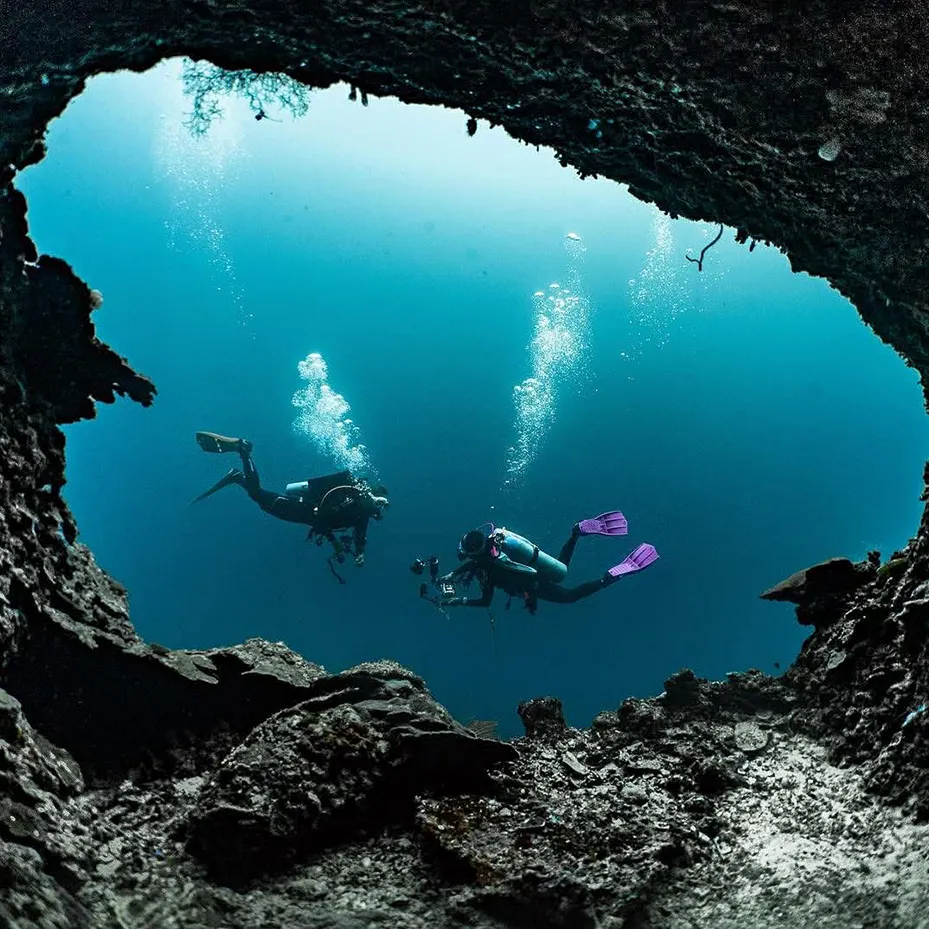
The passage is now protected by a network of 69 no-take marine protected areas spanning 170 square kilometres, coordinated through a 2017 inter-provincial agreement between five provinces and multiple national agencies including the DENR, the Bureau of Fisheries, and the Philippine Coast Guard.
Proposals are in motion for further designations: a Particularly Sensitive Sea Area under the International Maritime Organisation, inclusion in the Philippines’ National Integrated Protected Area System, and — perhaps most ambitiously — a UNESCO World Heritage Site nomination.
None of these designations will matter without enforcement, funding, and political will. Many of the existing MPAs are small, under-resourced, and inconsistently patrolled. Nearshore areas, particularly around Batangas Bay, face real threats from sewage, industrial effluents, and agricultural runoff. The passage’s offshore reefs are healthy; its coastal margins less so.
But the science is clear. The political will is growing. And the economic case — that a healthy Verde Island Passage sustains a dive tourism industry worth billions of pesos — is becoming impossible to ignore.
Two Hours from Manila
Perhaps the most remarkable thing about the Verde Island Passage is how close it is.
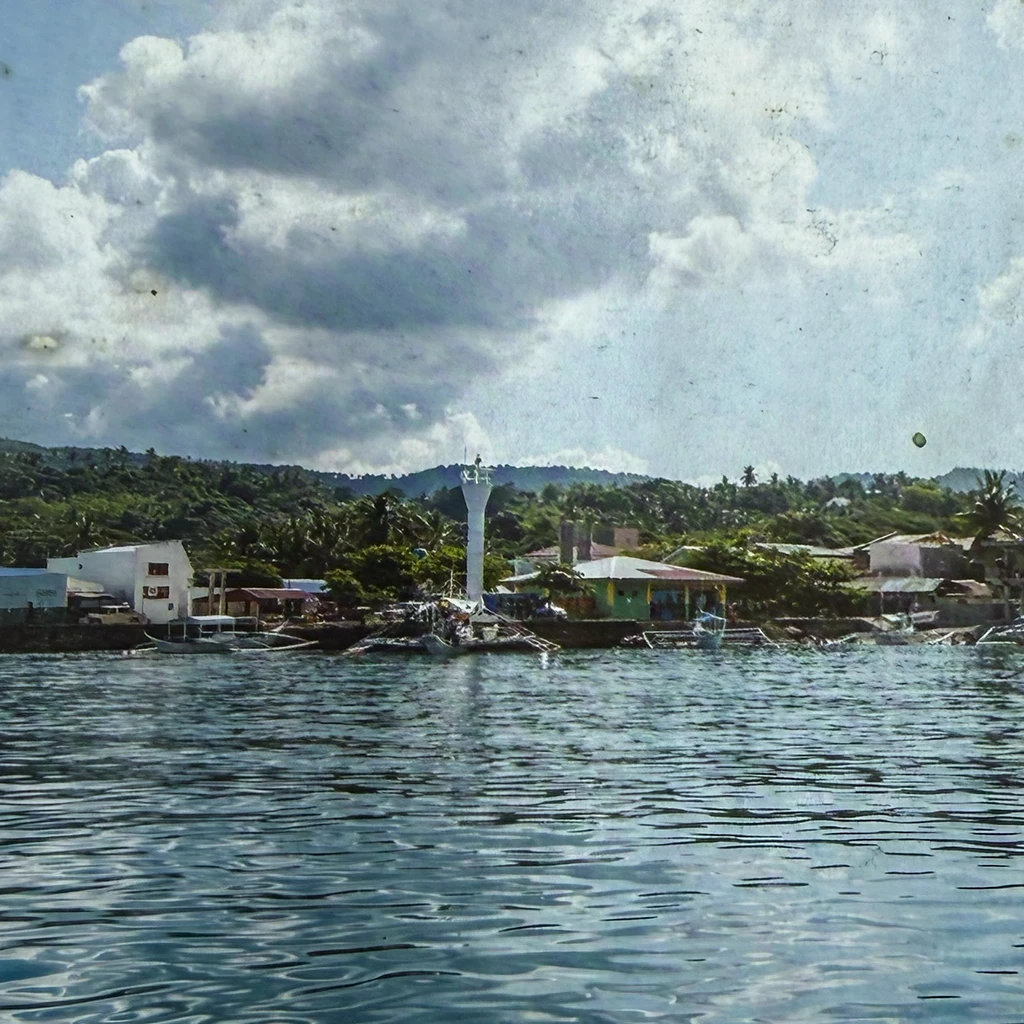
Anilao is approximately 130 kilometres south of Manila — a two to three hour drive depending on traffic, no flights required. Divers from around the world travel to remote Pacific atolls, to distant Indonesian islands, to expensive liveaboards in the Maldives, searching for biodiversity. The richest marine ecosystem ever measured is accessible by car from one of Asia’s largest cities.
The diving here is not for everyone. Anilao’s signature sites are current-swept coral walls where experienced divers drift through forests of soft coral and fans, and muck sites where patience and sharp eyes reveal creatures that most people will never see. The macro photography community has known about Anilao for years — it’s one of the world’s premier destinations for underwater photographers. The rest of the diving world is catching up.
What the passage offers is not the curated, manicured experience of a resort island. It’s something rawer: a working marine ecosystem at the peak of its diversity, accessible from a major capital, still yielding species unknown to science, still recovering from damage that kills reefs elsewhere, still largely unrecognised for what it is.
The center of the center. Two hours south, and a world most people don’t know exists.
Blue Ribbon Dive Resort sits on the western shore of Anilao, Mabini, Batangas — at the edge of the Verde Island Passage.
Sources
1. Carpenter, K.E. & Springer, V.G. (2005). “The center of the center of marine shore fish biodiversity.” California Academy of Sciences.
2. California Academy of Sciences (2011). “Expedition to the Center of the Center of Marine Biodiversity.”
3. PLOS ONE (2015). Marine Protected Area Network Study — Verde Island Passage.
4. Mission Blue (2023). “Verde Island Passage Named a Hope Spot.”
5. Coral Triangle Initiative (2017). “Five Provinces and National Agencies Join Forces to Protect and Conserve Verde Island Passage.”
6. GMA Network — “A ‘VIP’ of Global Marine Biodiversity in the Philippines.”
7. Oceanography Journal — “Regional Oceanography of the Philippine Archipelago.”
8. Academia.edu — “Diversity of Coastal Phytoplankton in Balayan Bay, Batangas, Philippines.”
9. Jonathan Venn, Blue Ribbon Dive Resort — 16 years diving the Verde Island Passage (2010-2026).
