Underwater photography is the art of controlling chaos.
You’re weightless in three dimensions, breathing through a machine, managing buoyancy with your lungs, tracking a creature that doesn’t want to be found, composing a shot through a viewfinder that’s fogged, backlit, or partially obscured by your own exhaled bubbles — and doing all of this while a current pushes you sideways and your dive buddy drifts out of sight.
There are easier hobbies. There are no more rewarding ones.
Anilao has become one of the world’s premier destinations for underwater photography for the same reason it leads the world in marine biodiversity: density. The number of subjects per square metre here exceeds anything else in the diving world. A single sixty-minute dive can produce encounters with frogfish, nudibranchs, cuttlefish, seahorses, and octopuses — subjects that photographers at other destinations spend entire trips hoping to see once.
This is a guide for photographers at every level: what makes Anilao extraordinary, how to start shooting underwater, and why the mentorship model matters more here than anywhere else.
The Subject Matter
Other dive destinations specialise. Lembeh Strait is famous for muck critters on dark sand. Raja Ampat for wide-angle reef scenics. The Maldives for pelagic encounters. Each produces a particular kind of image, and photographers plan trips accordingly.
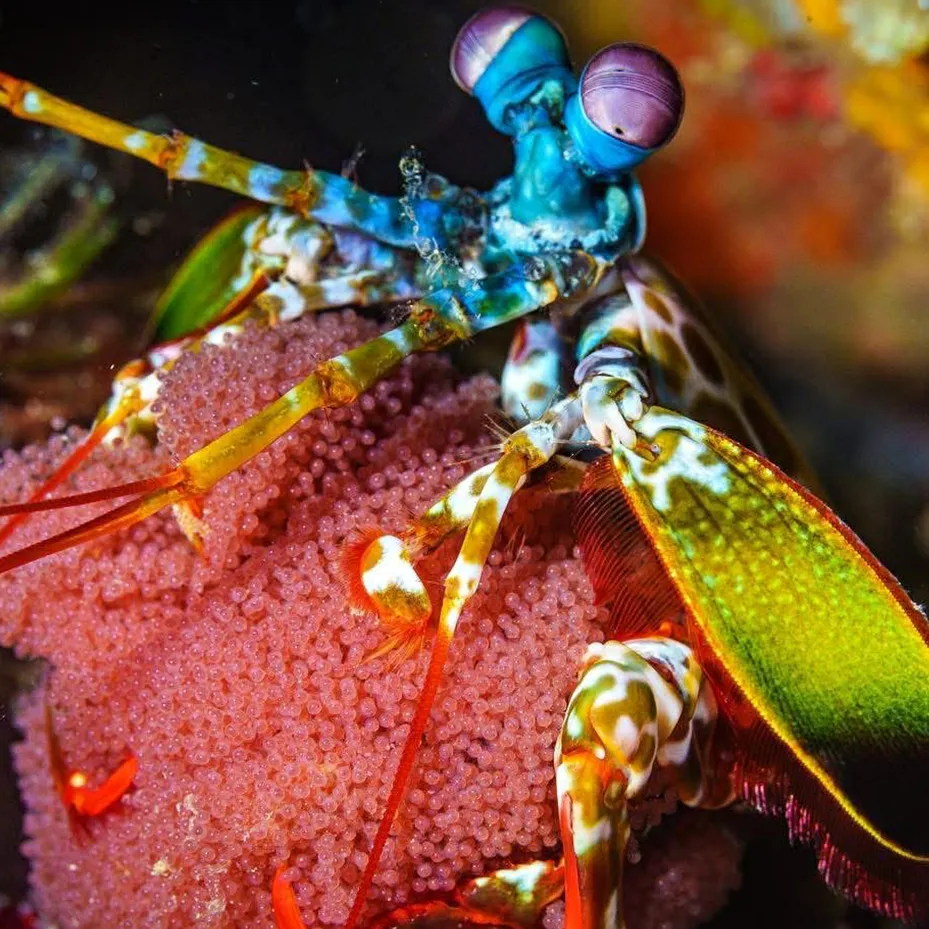
Anilao doesn’t specialise. It has everything — which is simultaneously its greatest strength and its greatest challenge for photographers.
Macro: The Infinite Gallery
Anilao’s macro subjects are the reason most photographers come. The numbers are difficult to overstate:
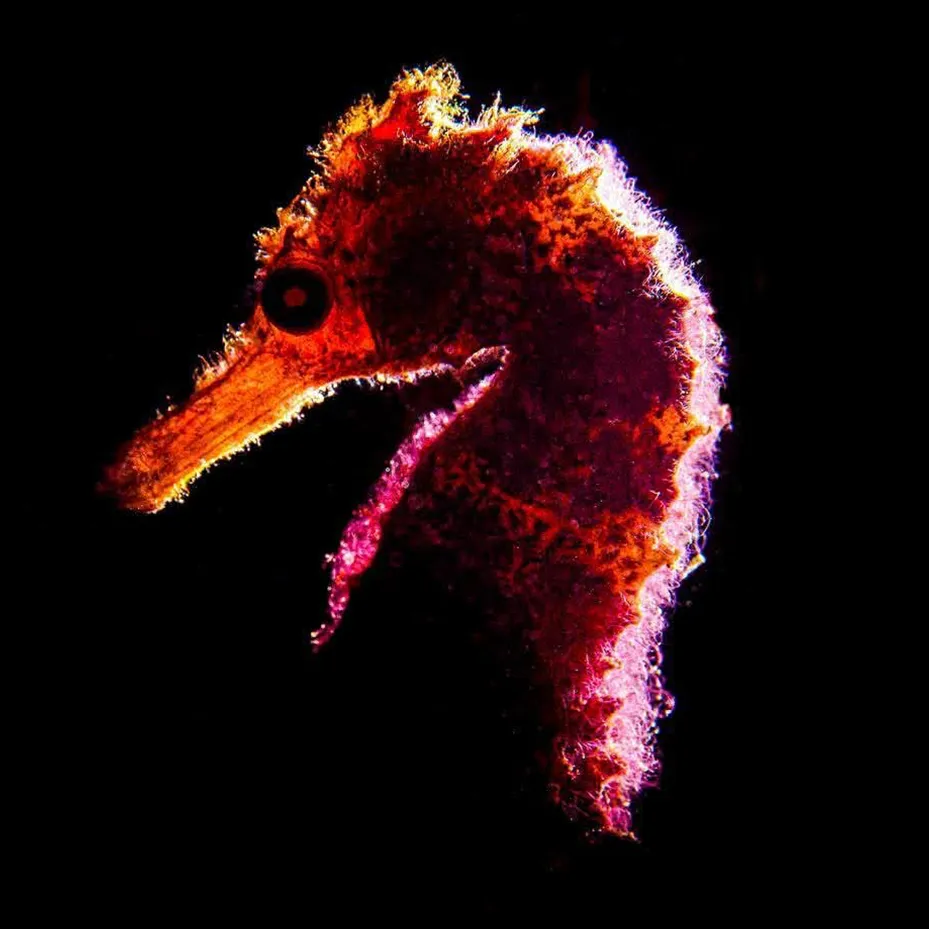
Over 600 species of nudibranch — sea slugs painted in every colour combination imaginable, ranging from microscopic specks requiring supermacro lenses to the Spanish dancer, a sixty-centimetre nocturnal swimmer in crimson. Many have never been photographed well, because many have never been identified.
Frogfish in extraordinary density. At Mato Point, eight frogfish of different species and colours have been documented within five square metres. They sit motionless on sponges, perfectly camouflaged, presenting the kind of portrait opportunity that rewards patience over speed.
Cephalopods that perform. The flamboyant cuttlefish walks across sand pulsing purple, yellow, and red — a living light show. The mimic octopus impersonates other species in real time. The blue-ringed octopus glows. The coconut octopus carries its shelter.
Pygmy seahorses on gorgonian fans — subjects measured in millimetres that require a divemaster who knows exactly which fan to check and a lens capable of isolating a creature smaller than a fingernail from a background of matching texture and colour.
The macro shooting in Anilao is not just good — it’s inexhaustible. You could dive the same site twice a day for a month and produce different images every dive.
Wide Angle: The Other Anilao
Anilao’s macro reputation overshadows its wide-angle potential, but the reef structure here is spectacular. Cathedral Rock’s coral-encrusted boulders and swim-throughs produce dramatic compositions. Kirby’s Rock is a vertical volcanic wall with gorgonian fans, barrel sponges, and passing pelagics. Sombrero Island offers turtle encounters against healthy coral backgrounds. And the soft coral gardens at multiple sites — carpets of colour in current-washed channels — rival anything in the Coral Triangle.
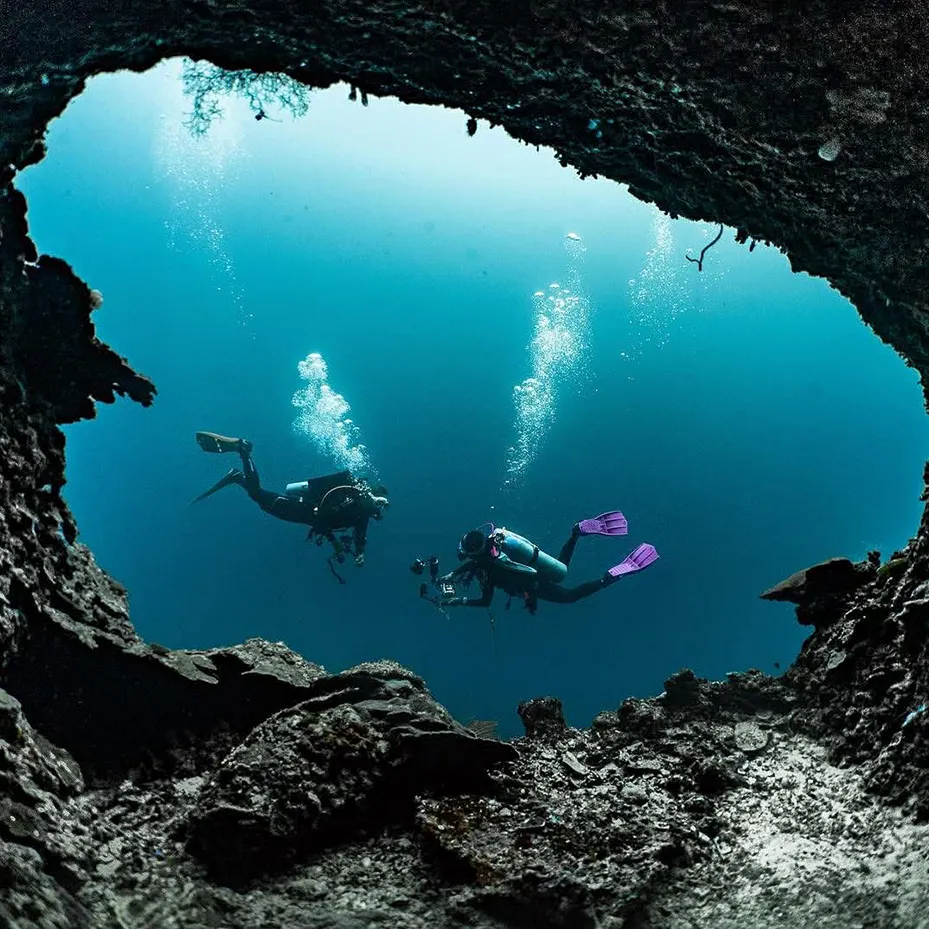
Night and twilight diving add another dimension entirely. The mandarin fish mating dance at Lighthouse — tiny, psychedelic fish performing courtship rituals at sunset — is one of the most sought-after behavioural sequences in underwater photography.
Blackwater: The Frontier
Anilao is Southeast Asia’s capital for blackwater photography — shooting larval and pelagic organisms that rise from deep water after dark. Argonauts, transparent larval fish, deep-water squid, and organisms that have never been identified. The images from Anilao’s blackwater dives look like they were shot in space, because in a sense they were — open water, total darkness, a single light, and creatures from another world drifting through the beam.
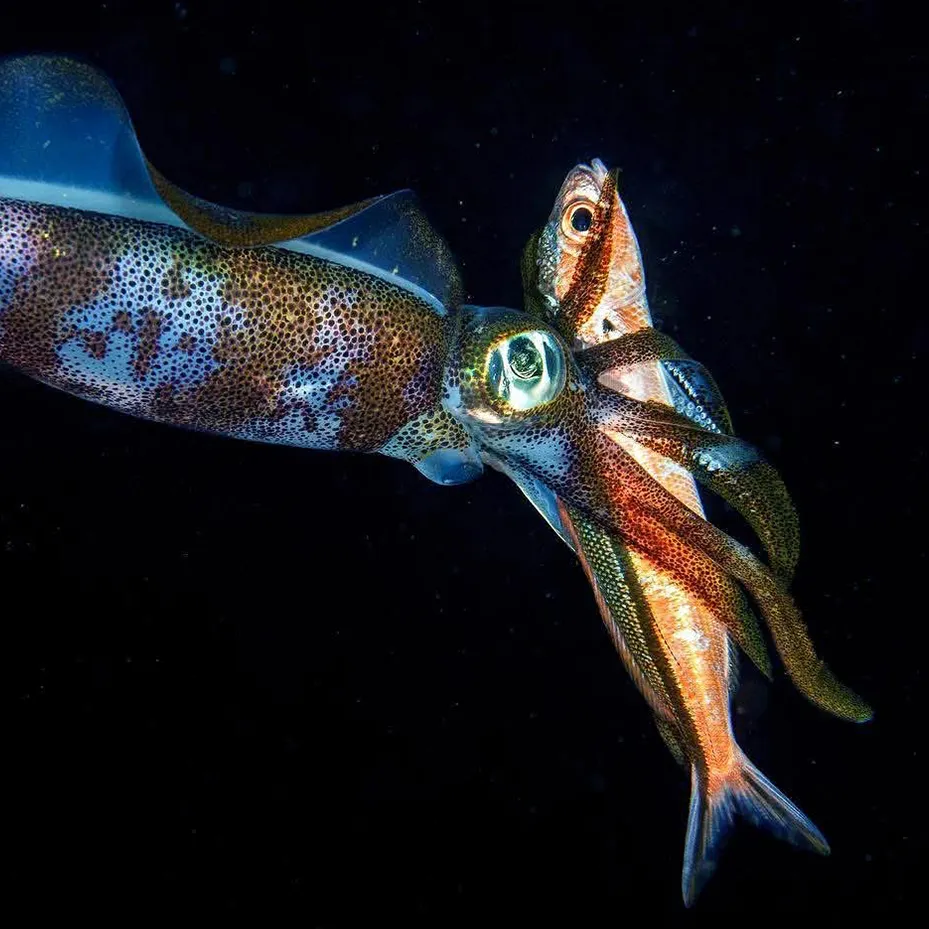
This is the cutting edge of underwater photography. The images being produced here are genuinely novel — species being documented photographically for the first time.
The Gear Question
Every beginning underwater photographer asks the same question: what camera should I buy?
The honest answer: it matters less than you think.
Modern compact cameras in underwater housings — systems costing a fraction of professional rigs — produce publication-quality images in the right hands. A housed Olympus TG series, a Canon G7X, or a Sony RX100 can do macro work that would have required a full DSLR system ten years ago. The housing, wet lenses, and strobes are more important than the camera body.
What matters more than gear:
Buoyancy. If you can’t hold yourself motionless at a subject’s depth without kicking up sand or crashing into reef, no camera system will save your images. The single most important photography skill is also the most fundamental dive skill. Master buoyancy first. Then worry about f-stops.
Light. Underwater photography is strobe photography. Water absorbs light — reds disappear within the first five metres, oranges by ten, and by twenty metres everything is blue-green. Your strobe restores colour, provides contrast, and separates your subject from its background. Learning strobe positioning — angle, power, distance from subject — is more important than any camera setting.
Patience. The best underwater photographers are the slowest divers. They find a subject, settle into position, observe behaviour, compose carefully, and wait. A frogfish that’s been sitting motionless for an hour will yawn eventually. A cuttlefish will change colour. A nudibranch will extend its rhinophores. The image comes to the photographer who waits, not the one who chases.
Proximity. Water reduces contrast, adds particles, and softens detail. The closer you are to your subject, the better the image. This means macro lenses, wet diopters, and the willingness to get your port within centimetres of a creature without disturbing it. In Anilao, where the subjects are small and the divemasters know exactly where they are, the proximity advantage is built into every dive.
The Mentorship Model
Underwater photography is notoriously difficult to learn from books or videos. The environment is too variable, the feedback loops too slow (you can’t review images properly until you’re back on the surface), and the interaction between diving skills and photographic skills too complex for self-study to be efficient.
This is why mentorship matters.
Gary Tyson is a professional underwater photographer based at Blue Ribbon Dive Resort whose mentorship program takes a different approach from the standard “underwater photography course.” Rather than teaching camera settings in a classroom and hoping students can apply them in open water, Gary dives alongside his students, identifying subjects, demonstrating technique in real time, and reviewing images between dives with immediate, specific feedback.
The mentorship covers:
- Camera configuration — settings optimised for Anilao’s specific conditions (lighting, visibility, typical subjects, common backgrounds)
- Strobe technique — positioning for macro and wide-angle, managing backscatter, creating separation
- Subject approach — how to approach marine life without disturbing it, how to position yourself for the shot, how to read creature behaviour
- Composition — applying photographic principles underwater, where the rules change because the medium is three-dimensional, the light is artificial, and the subject may move
- Post-processing — editing underwater images to correct colour, enhance contrast, and produce finished work
The program is available to divers at all levels — from beginners with compact cameras to experienced photographers transitioning from land to water. The key difference from a standard course is continuity: Gary works with students across multiple dives, building skills progressively rather than cramming everything into a single session.
The Competition Culture
Anilao hosts the Anilao Underwater Shootout — established in 2013 by the Department of Tourism and dubbed the “World Cup of Underwater Photo Competitions.” The competition draws professional and amateur photographers from around the world and operates under a strict no-manipulation policy: no touching marine life, no moving creatures for the shot, no rearranging the environment.
This ethic — photograph what you find, as you find it — is central to Anilao’s photography culture. The competition doesn’t just test photographic skill. It tests patience, observation, and respect for the reef. The winning images are produced by photographers who understand the marine life deeply enough to anticipate behaviour, position themselves correctly, and wait for the moment — not force it.
The no-manipulation policy reflects a broader principle: the reef exists for itself, not for the camera. A photographer who kicks up sand to reposition, touches coral to improve a background, or moves a nudibranch to better light is damaging the thing that makes the image worth taking. Anilao’s photography community enforces this as a norm, not just a rule.
Why Start Here
Beginning underwater photographers face a problem that experienced ones have solved: they don’t know what they don’t know. Camera settings can be researched. Strobe positions can be diagrammed. But the integration of buoyancy, positioning, timing, light, and subject knowledge — the skill of being in the right place at the right moment with the right settings while remaining perfectly neutral in the water — can only be learned by doing it. Repeatedly. With someone who can see what you’re doing wrong and tell you immediately.
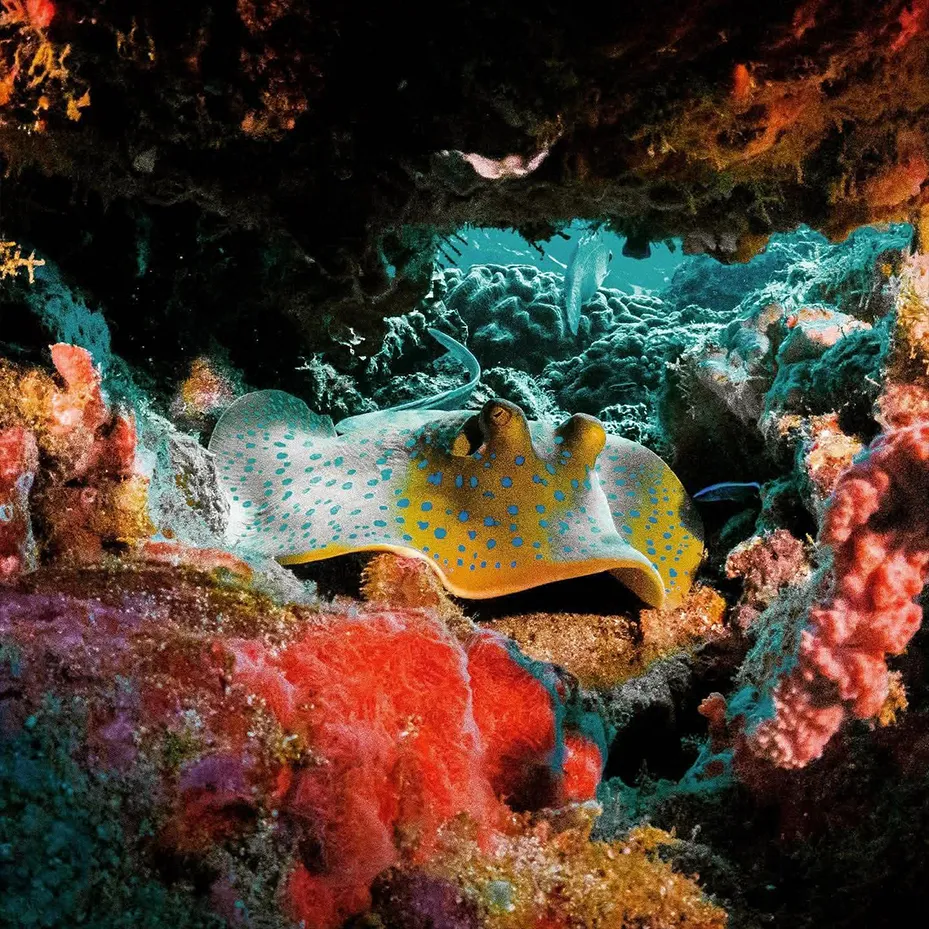
Anilao gives you three things no other destination combines at this level:
Subjects. More species per dive than anywhere else on Earth. You will never run out of things to photograph.
Guides. Divemasters with decades of site-specific knowledge who can find a pygmy seahorse on a gorgonian fan or a juvenile frogfish on a sponge that you would swim past a hundred times without seeing.
Mentorship. A professional photographer who will dive with you, review your images, and teach you in the water rather than in a classroom.
The camera doesn’t matter. The destination does. And there is nowhere else in the world where a beginning underwater photographer has access to this many subjects, this much expertise, and this much reef — two hours from a major international airport, on the richest marine ecosystem ever measured.
Start here. The rest follows.
Blue Ribbon Dive Resort is an SDI/TDI 5-Star Dive Centre in Anilao, Mabini, Batangas. Gary Tyson’s underwater photography mentorship program is available year-round.
Sources
1. Underwater Photography Guide — Anilao as macro photography destination.
2. DivePhotoGuide — “Alluring Anilao: Paragon of the Philippines.”
3. Department of Tourism — Anilao Underwater Shootout (est. 2013).
4. Mares Blog — Blackwater photography in Anilao.
5. Gary Tyson, Blue Ribbon Dive Resort — Mentorship program.
6. Carpenter, K.E. & Springer, V.G. (2005). “The center of the center of marine shore fish biodiversity.”
