Ask a diver why they keep coming back and the answer is rarely about the fish.
They’ll mention the fish, sure. The coral. The visibility. They’ll show you photographs of nudibranchs the size of your thumbnail, painted in colours that don’t seem real. But push them — really push — and most will arrive at the same place. It’s quieter down there. Not just acoustically, though it is that too. Something else happens. The noise inside your head — the mortgage, the email you forgot to send, the argument you’re replaying for the third time — it stops. Not gradually. It stops.
Every diver knows this feeling. Most can’t explain it.
The explanation turns out to be 300 million years old.
The Reflex You Didn’t Know You Had
In the 1960s, physiologist Per Scholander documented something remarkable: when a mammal’s face is immersed in water, its body undergoes an immediate and involuntary transformation. Heart rate drops — in some cases below 40 beats per minute. Blood vessels in the extremities constrict, redirecting flow to the brain and heart. The spleen contracts, releasing stored red blood cells to increase oxygen-carrying capacity. Blood flow to the brain increases by as much as 100%.
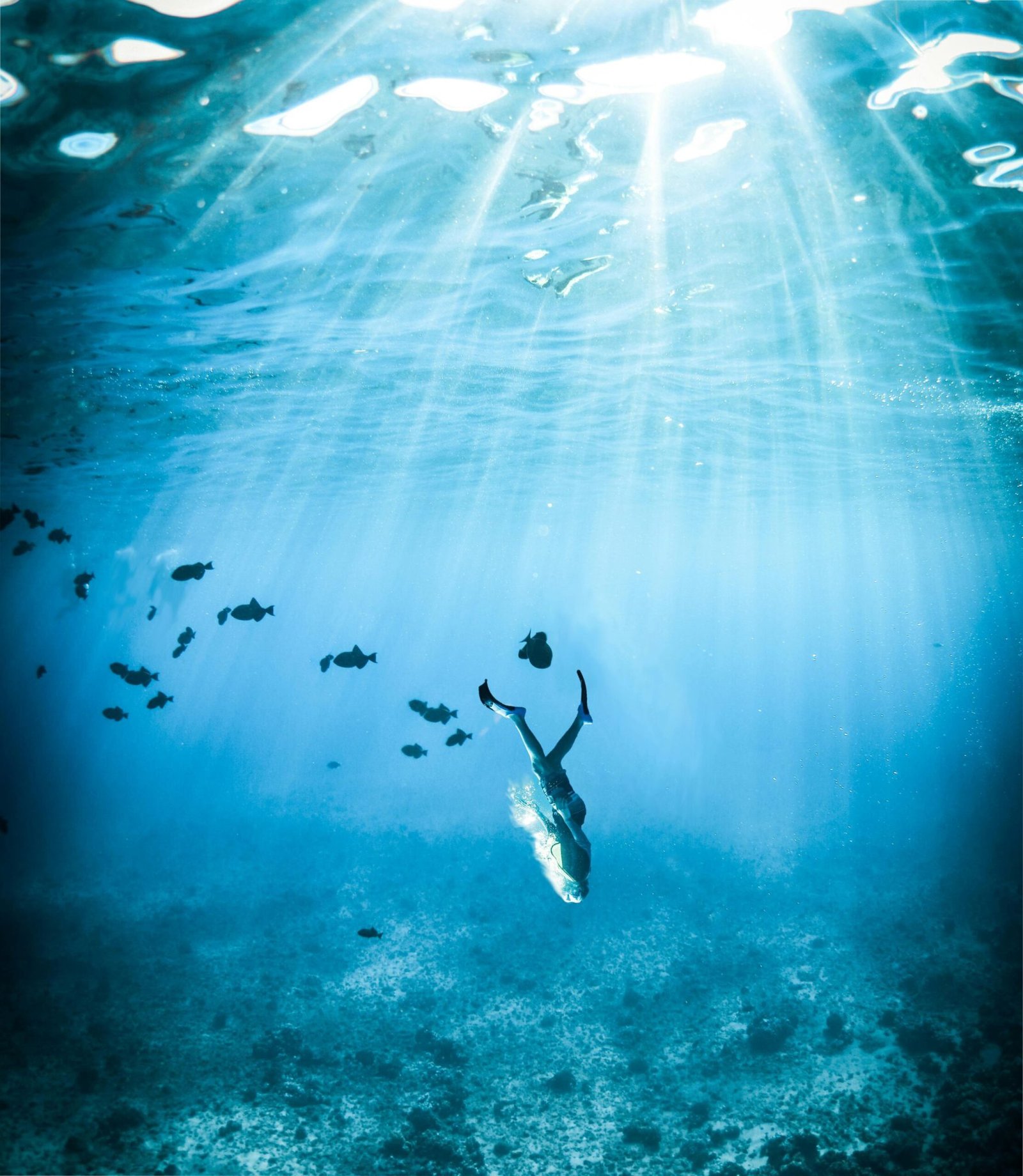
Scholander called it the mammalian dive reflex. Every mammal has it — seals, whales, dogs, humans. It is triggered by cold water on the face, particularly around the forehead and eyes, and enhanced by breath-holding and pressure. It is not learned. It is not a skill. It is a reflex as ancient as the evolutionary line that connects us to every creature that ever returned to the water.
Here is what matters for divers, and for anyone who has ever wondered why the water feels the way it does: every component of the mammalian dive reflex is the physiological opposite of an anxiety response.
Anxiety is your sympathetic nervous system — fight or flight. Heart rate up. Breathing shallow and fast. Blood to the extremities, ready to run. Cortisol flooding your system. The world narrows to the threat, real or imagined.
The dive reflex is your parasympathetic nervous system — rest and recover. Heart rate down. Blood to the core. The body shifts into a mode of conservation, of quiet efficiency. It happens the moment your face breaks the surface. It is not a choice. It is biology.
Breathing Like You Mean It
The first thing every dive student learns is how to breathe.
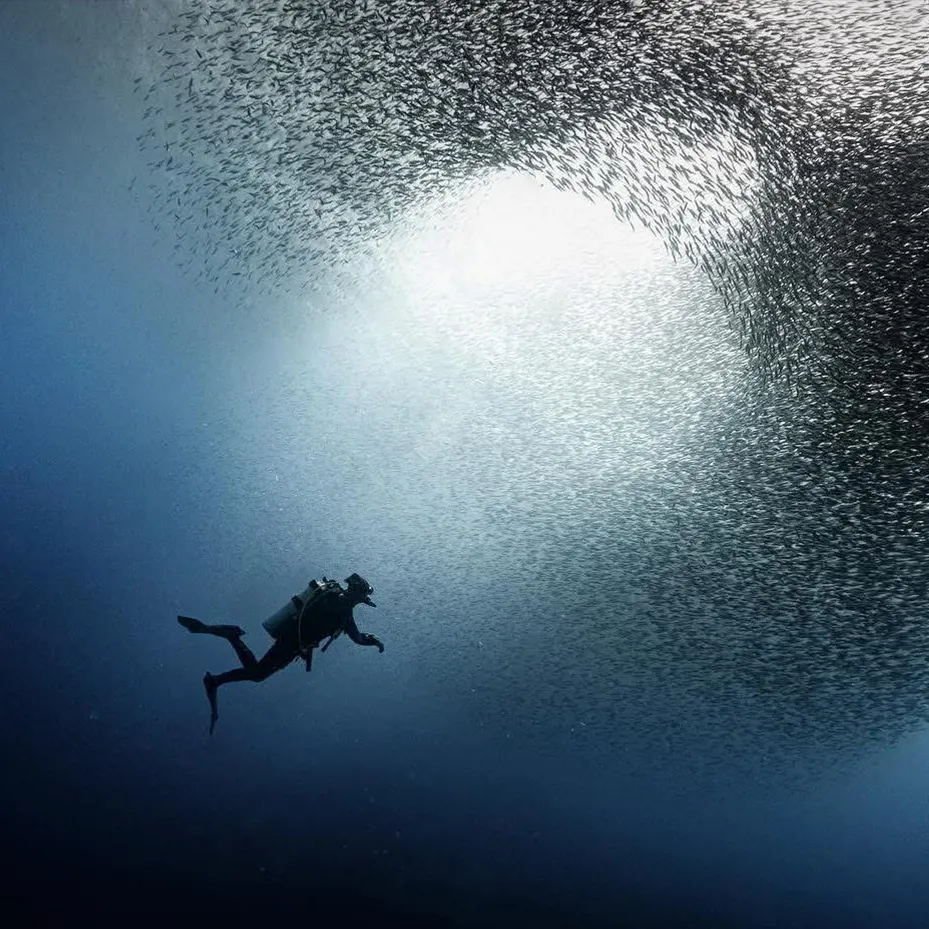
This sounds absurd — you’ve been breathing your entire life. But diving demands a particular kind of breathing: slow, deep, deliberate. Rushed breathing burns through your air supply. Shallow breathing risks CO2 buildup. The physics of breathing compressed air at depth mean that every breath you take must be conscious, controlled, measured.
This is, without the incense and the cross-legged sitting, exactly what meditation teachers spend years trying to teach their students. Controlled diaphragmatic breathing activates the vagus nerve — the longest nerve in the body, running from the brainstem to the abdomen, the primary channel of the parasympathetic system. Slow exhales, in particular, stimulate the vagal response. Your body reads the signal: we are safe. We can rest.
I know this firsthand. At 40 or 45 metres — depths where I spend much of my working life — you physically cannot rush your breathing. The air is denser at depth, which means every breath takes more effort and your lungs are slower to expel carbon dioxide. Breathe too fast and CO₂ builds up, clouding your thinking at precisely the moment you need it most. So you learn to breathe slowly, deliberately, with long controlled exhales that let the gas exchange do its work. In learning this, you accidentally train the same neural pathways that monks and yogis have been cultivating for millennia.
I’ve been diving the Verde Island Passage daily for sixteen years, and the simplest way I can put it: you can’t think about your problems when you’re managing gas density, decompression obligations, and buoyancy at 45 metres. Your brain doesn’t have room for it.
The Present Tense
This is the second mechanism, and it’s the one divers describe most often without knowing what to call it.
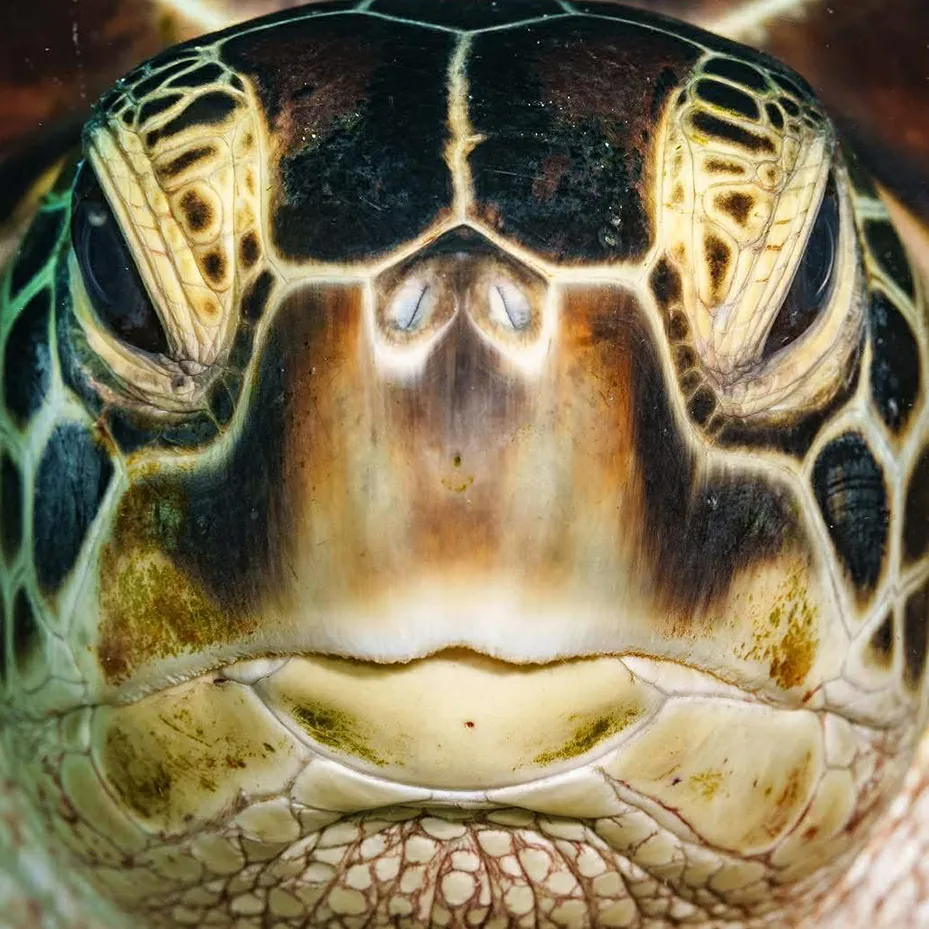
Psychologists call it enforced present-moment awareness. Divers just call it the dive. Underwater, there is always something that requires your attention right now. Your depth. Your air pressure. Your buddy’s position. The current pushing you sideways. The cuttlefish doing something extraordinary three metres to your left. The brain, which on land is free to wander through regret and worry and the endless rehearsal of imagined futures, is suddenly fully occupied.
This is not escapism. Escapism implies avoidance — numbing yourself to problems that remain. What happens underwater is different. The cognitive resources that anxiety monopolises — the ruminating, catastrophising, pattern-matching parts of your brain — are redirected to a task that is real, immediate, and absorbing. You are not avoiding your life. You are, for thirty minutes or an hour, entirely inside it.
Flow state researchers describe this as the condition where skill and challenge are precisely matched — demanding enough to require your full attention, not so demanding that it overwhelms. Diving, for trained divers, sits exactly in this window. Every dive is different. The reef is never the same twice. The challenge shifts constantly, and with it, your focus.
Blue Space
In recent years, a growing body of academic research has begun to quantify something that coastal communities have always known: proximity to water improves mental health.
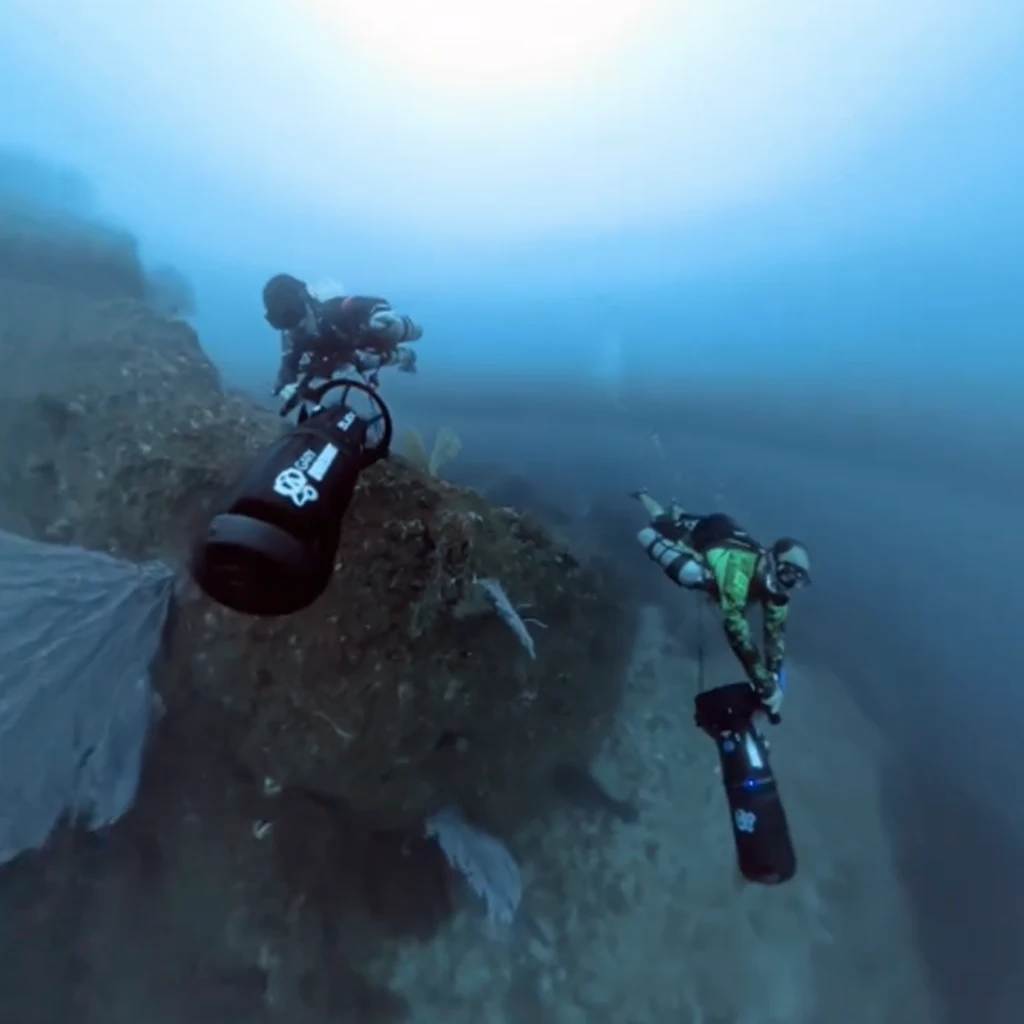
The field is called blue space research, and its findings are consistent across cultures and geographies. People who live near water report lower stress, better mood, and greater overall wellbeing than those who don’t. The effect persists after controlling for income, exercise, and other lifestyle factors. Something about water itself — the sight of it, the sound of it, the feel of it — engages the brain in ways that reduce the markers of chronic stress.
The mechanisms are still debated. Some researchers point to the visual qualities of water — the repeating, non-threatening patterns of waves and light that hold attention without demanding it, a quality known as “soft fascination.” Others emphasise the negative ions generated by moving water, or the ambient sound profile of waves and currents, which shares characteristics with white noise and has been shown to reduce cortisol levels.
Divers don’t just live near water. They inhabit it. The blue space isn’t a view from a window. It’s a three-dimensional environment surrounding you on all sides, filtering the light, absorbing the sound, holding you in something close to weightlessness. If proximity to water is therapeutic, immersion is the concentrated form.
The Oldest Divers on Earth
The Bajau people of the Philippines and Indonesia have been diving on a single breath for thousands of years. They are, genetically, adapted to it — studies have documented that their spleens are up to 50% larger than those of neighbouring land-dwelling populations, an adaptation that increases oxygen storage for longer dives. The gene responsible, PDE10A, appears to have been under natural selection.
The Ama divers of Japan and Korea have practised breath-hold diving for over 2,000 years, traditionally harvesting abalone, seaweed, and pearls. Their culture treats the water not as a workplace to be endured but as a space that sustains — physically, economically, and psychologically.
Neither culture would use the language of modern psychology. They would not describe the mammalian dive reflex by name, or cite studies on parasympathetic activation, or reference blue space research. But they know the quiet. They’ve always known it. The science is catching up to what people who spend their lives in water have understood for generations.
Why They Come Back
Blue Ribbon Dive Resort sits on the shore of the Verde Island Passage, in the most biodiverse marine ecosystem ever measured. The diving here is world-class. The coral is extraordinary. The creatures hiding in the reef include species that science hasn’t catalogued yet.
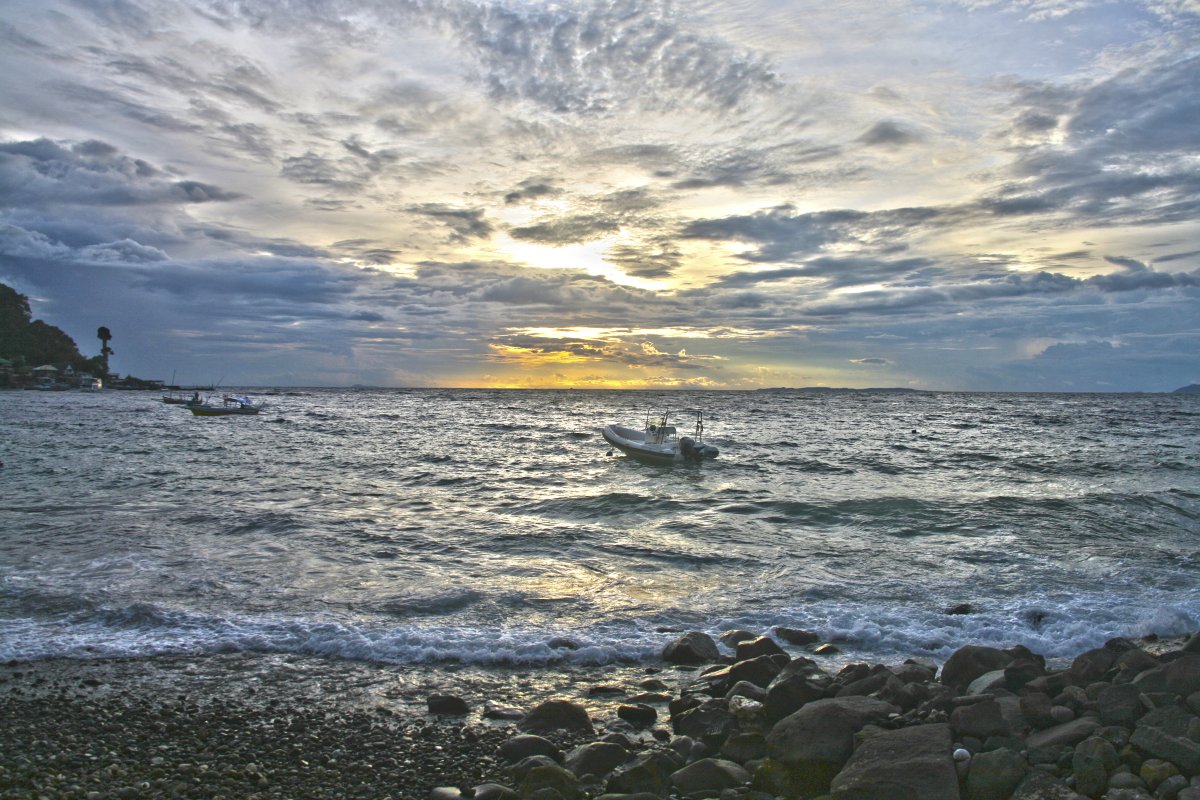
But ask the regulars — the ones who come back year after year, who book their next trip before they’ve finished this one — and many of them will tell you something simpler. It’s the quiet. The hour they spend underwater is the hour they feel most like themselves. Not because the problems go away. They’re all still there when you surface. But for a while, you were somewhere else. Somewhere older than language, older than worry. Somewhere your body knew how to be before your mind learned how to overthink.
The mammals figured this out 300 million years ago. The Bajau knew it for millennia. Divers rediscover it every time they descend.
The world disappears when you go underwater. Not because you’re escaping it. Because, for a few minutes, you’re finally quiet enough to stop carrying it.
Blue Ribbon Dive Resort is located in Anilao, Mabini, Batangas — at the edge of the Verde Island Passage, the most biodiverse marine ecosystem on Earth.
Sources
1. Scholander, P.F. (1963). “The Master Switch of Life.” Scientific American.
2. Schagatay, E. — Human diving reflex research, Uppsala University.
3. Ilardo, M.A. et al. (2018). “Physiological and Genetic Adaptations to Diving in Sea Nomads.” Cell, 173(3).
4. White, M.P. et al. (2020). “Spending at least 120 minutes a week in nature is associated with good health and wellbeing.” Scientific Reports.
5. Nichols, W.J. (2014). Blue Mind: The Surprising Science That Shows How Being Near, In, On, or Under Water Can Make You Happier, Healthier, More Connected, and Better at What You Do.
6. Frontiers in Psychology — Blue space and mental health meta-analyses.
